Fractal Artist
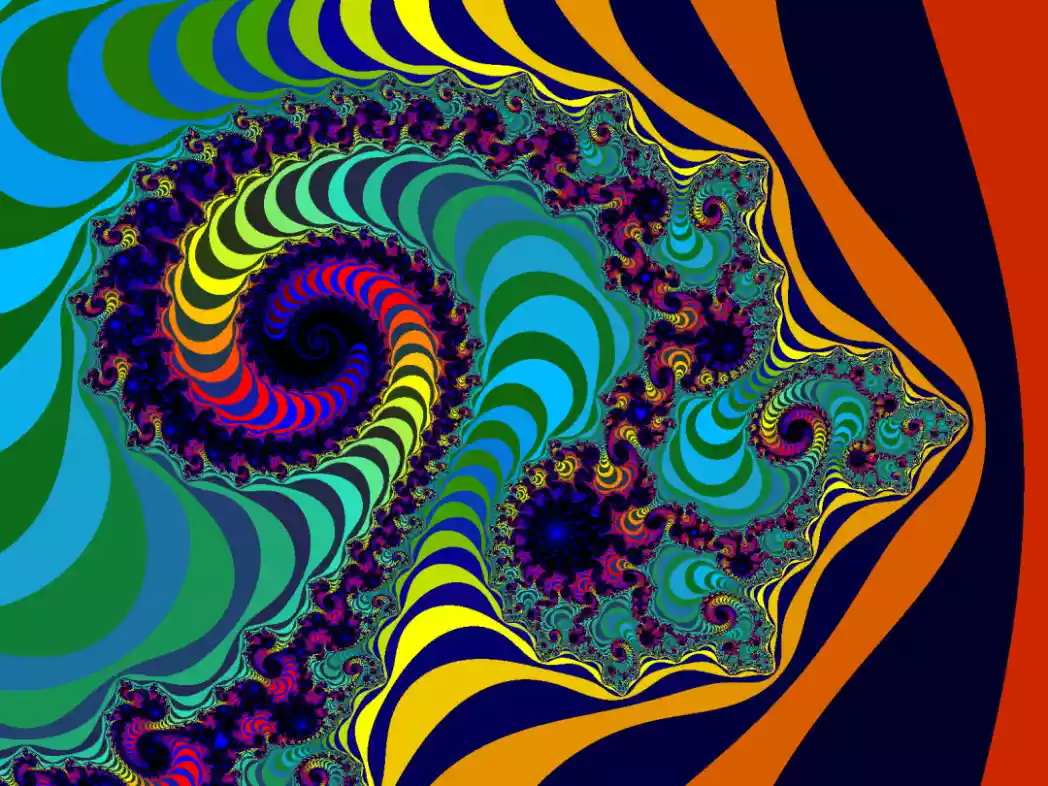
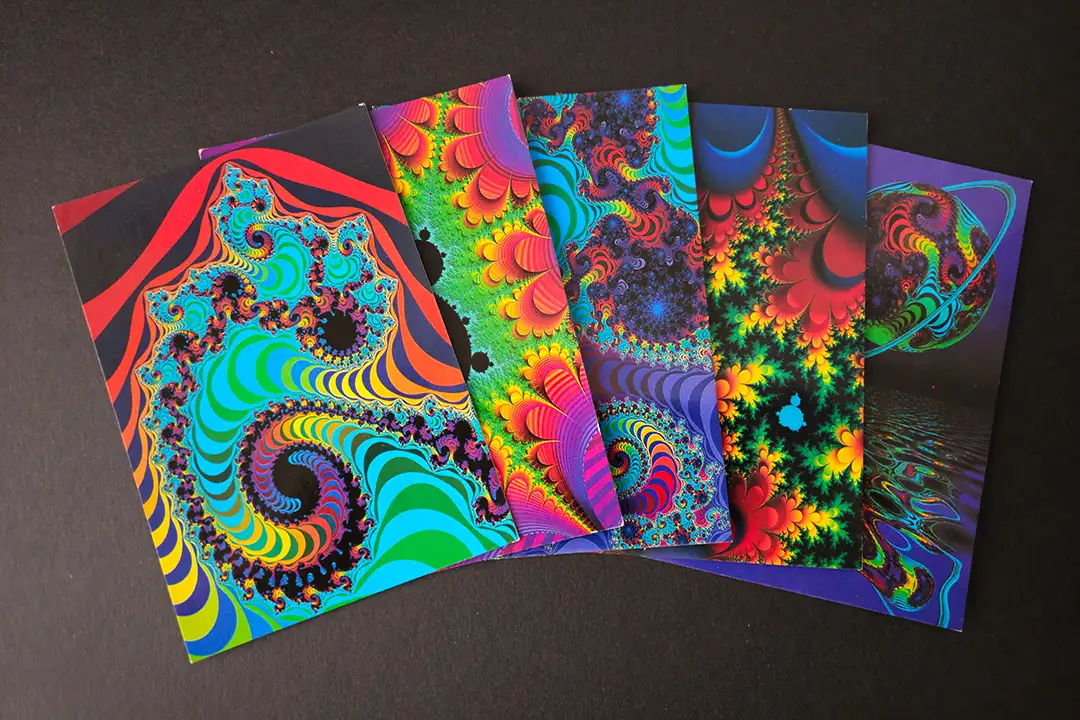
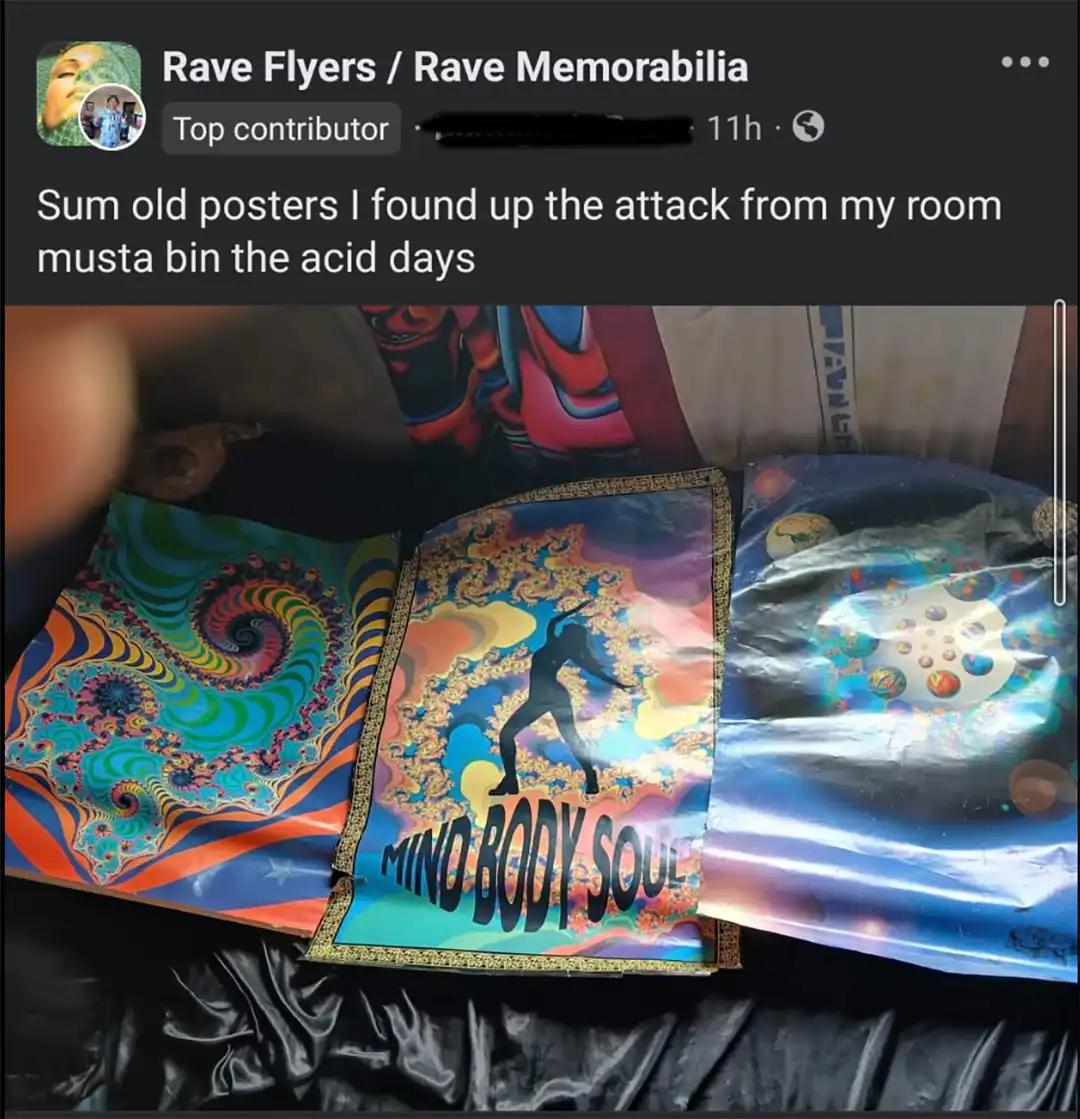
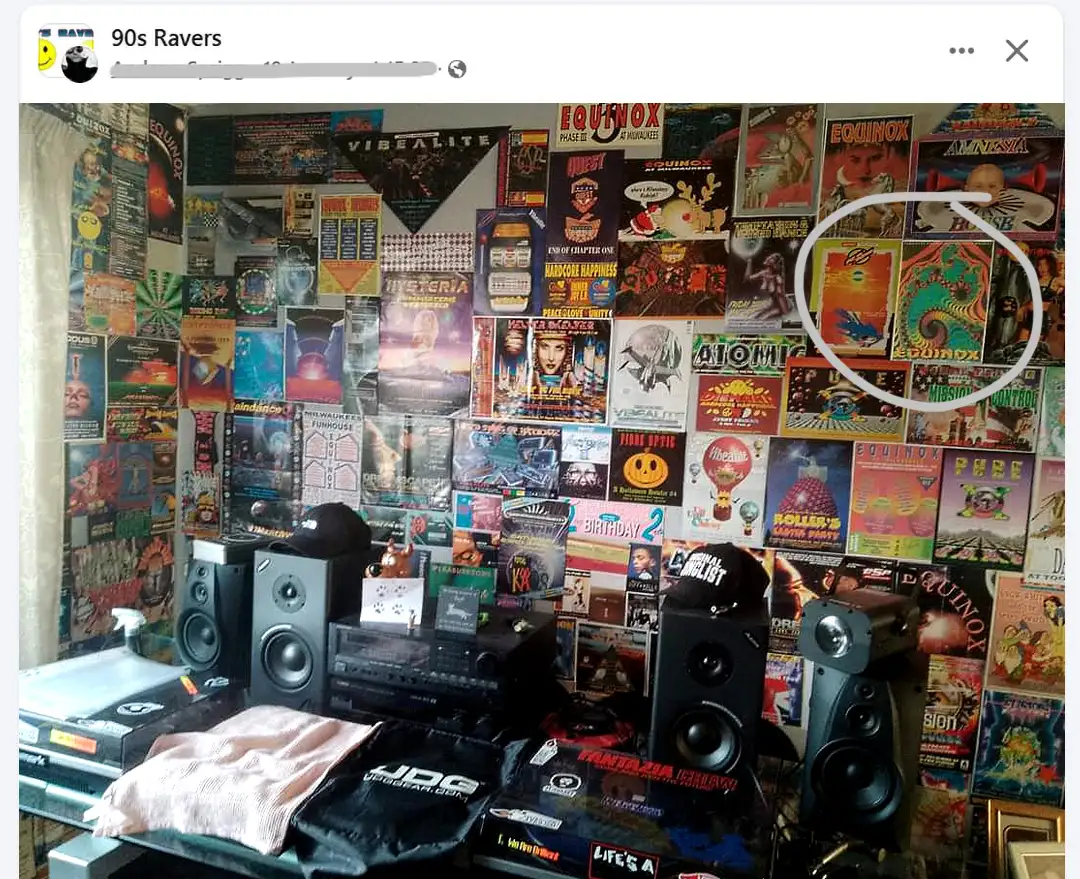
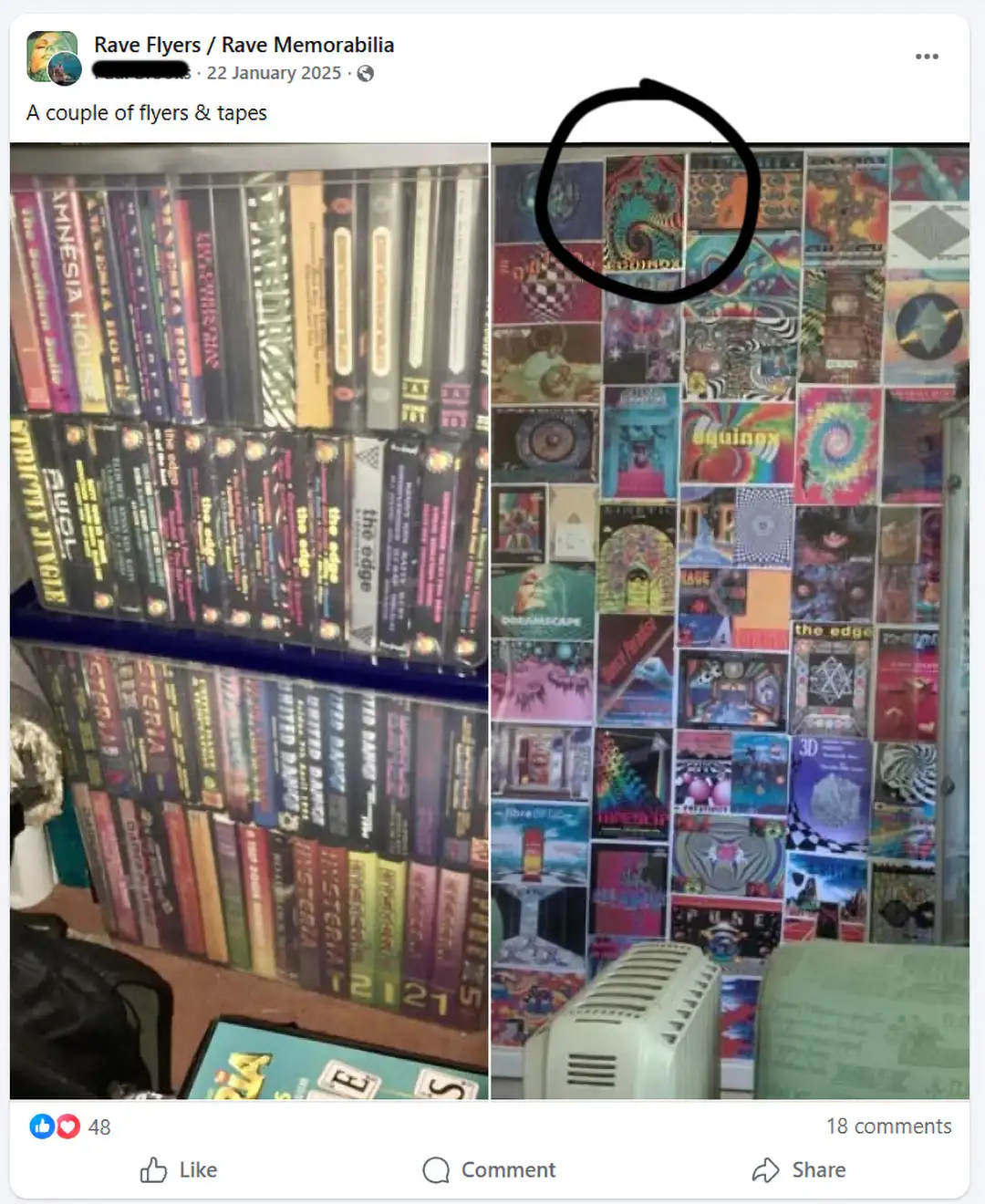
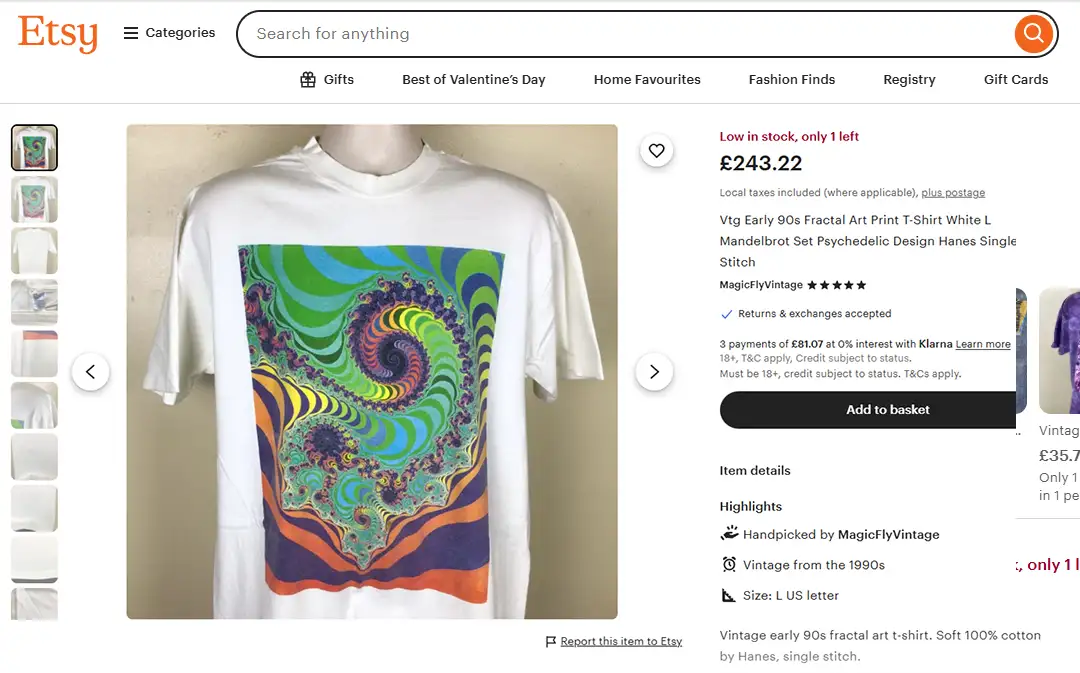
The futuristic and trippy aesthetics of fractals became icons of this hedonistic rave generation, serving as a backdrop to fast-paced electronic music. Fractals were frequently featured in promotional materials for warehouse parties and club nights.
Rave flyers adorned with futuristic and irreverent designs incorporating fractals were handed out to promote all-nighters, with many people keeping them as souvenirs and decorating their walls. Fractals brought psychedelic imagery up to date with contemporary culture that was embracing technology, and they became an icon representing the dance music tribe.
This image eventually found its way onto the flyer promoting a night in the UK called Equinox at a club named Milwaukee's. It was one of the first fully licensed all-night rave venues in the UK. DJs featured at this event included prominent names such as Grooverider, LTJ Bukem, Fat Controller, DJ Hype, Micky Finn, DJ SS, and Slipmat, among others
This flyer has become collectable now, and people share images of them online, and collectors trade them. People often post old pictures of the flyers' walls they had back in the day, and you can often see it in the background.


How this Fractal Image Found Its Way into a Gallery in the mid 90s
By the middle of the 90s, Fractals had started to have a much wider appeal. Industry had started to find lots of applications for this science in the real world, and it was also being adopted by digital designers and artists.
Much of the debate at the time was centred around how digital art was perceived by the contemporary art world, and fractals, although popular in poster shops on album covers and as the visual for dance music, were considered an outsider by the art world.
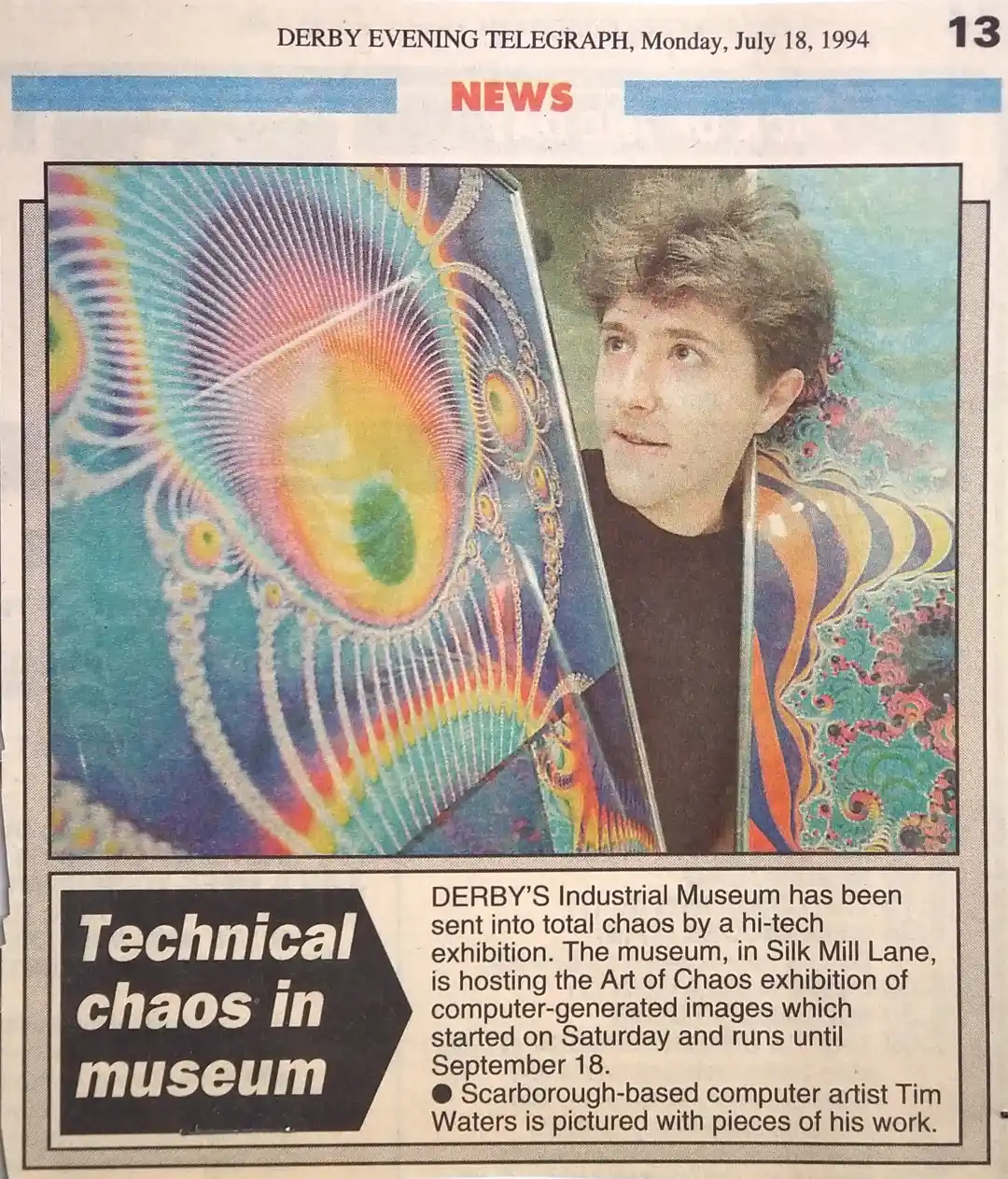
However, smaller galleries and museums that had exhibition spaces were aware of people's curiosity to see fractal art and became interested in showing it. In 1995, I put together an exhibition that included this image, which toured the UK.
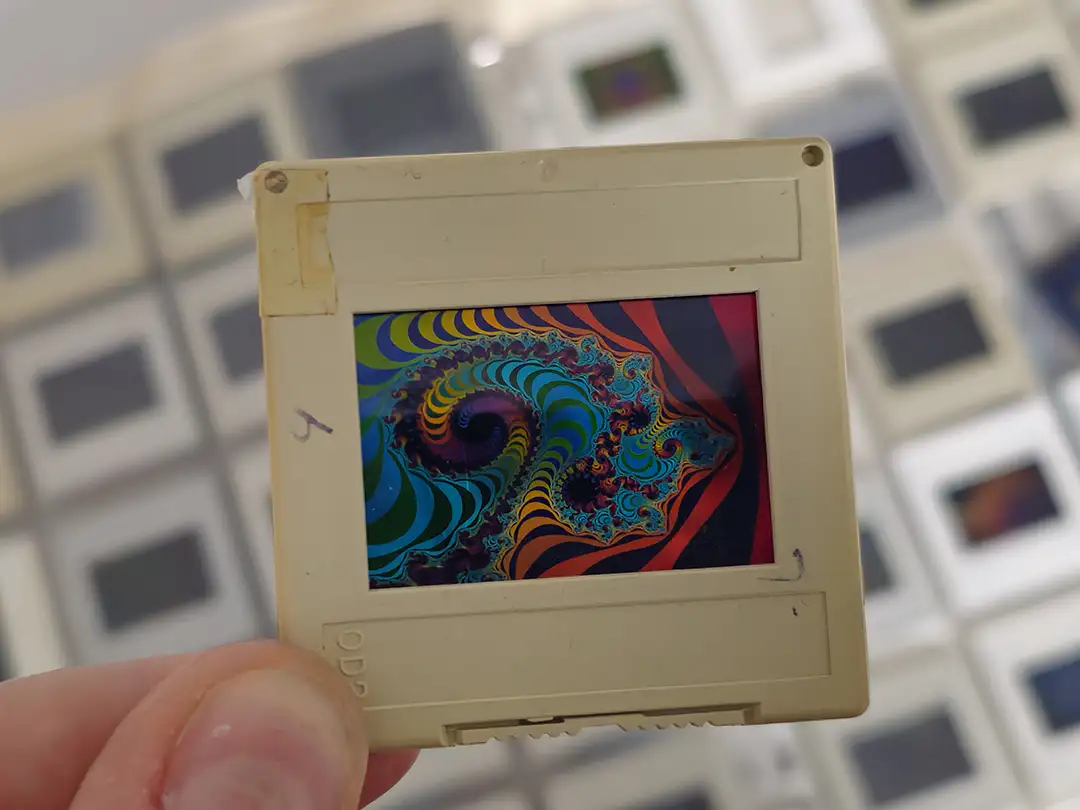
For this, the design was imaged onto medium format transparency and developed as an A1 photograph. The deep colours and the glossy paper added depth to the image.
The exhibition called The Art of Chaos visited locations including Derby Industrial Museum, Warwick Central Art Gallery, and Milton Keynes Long Lounge. I had the exciting opportunity to discuss my art work on regional news programs and radio shows.
How was this early 90s fractal image published?
It's hard to imagine just how much effort and trial and error were involved in getting an image like this off my computer and printed onto various products before the advent of digital publishing. Someone once asked if it was as simple as taking a screenshot. In a way, he was correct. The early versions of this image were literally photographs of my computer screen, taken with a 35mm camera.
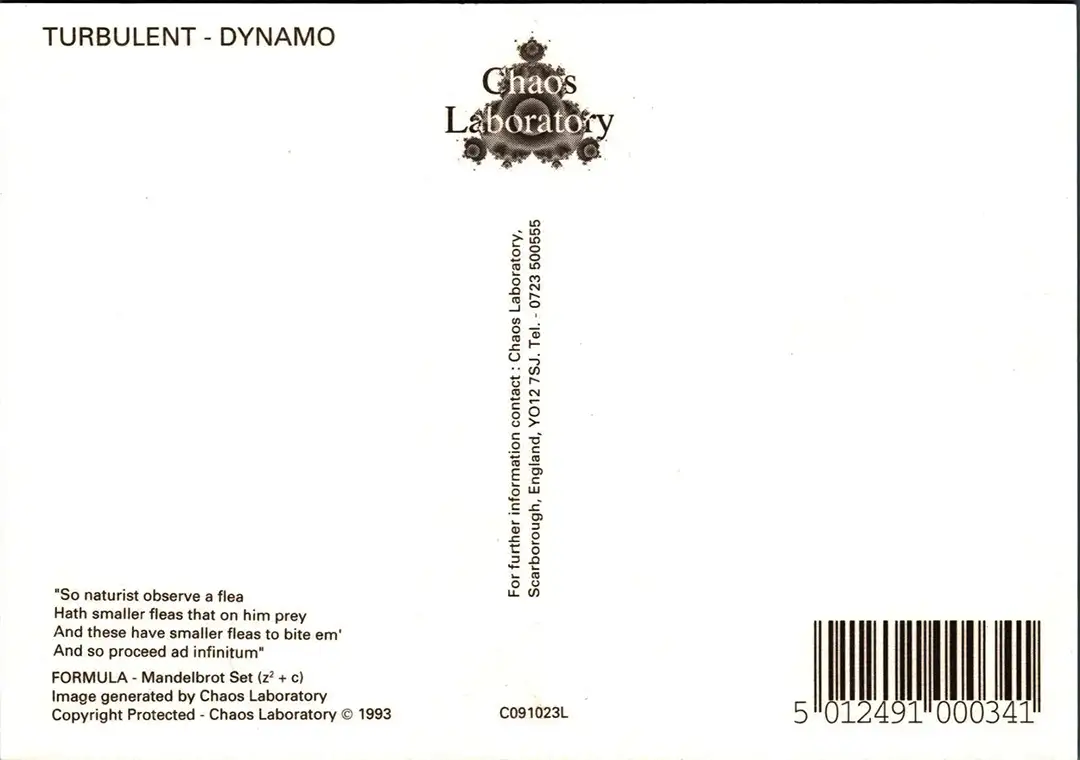
The people who wanted to print this image typically made small runs of posters, postcards, and t-shirts for bands and films for student markets and record and poster stores. They hadn't yet started using digital printing and expected you to give them colour transparencies, which they were accustomed to working with. A 35m colour slide of a "screenshot" was ideal.
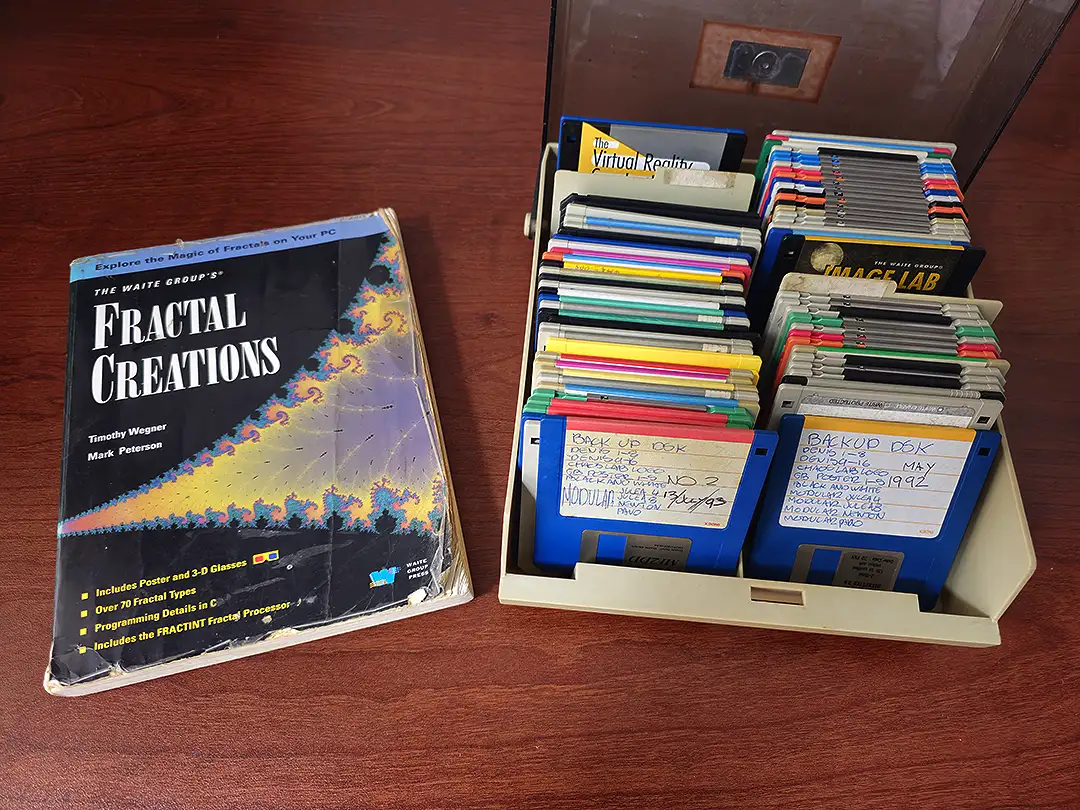
By the mid-90s, companies started offering the service of digitally transferring imaging onto a colour transparency, which improved the quality. However, getting the image to them was still difficult. There was no internet or email at the time, so I literally had to mail magnetic disks to them. These disks could only hold 1.3 MB, so a large image often required several disks to transport a single image.
Most of the time, these disks would get corrupted. The printers all used Macs, while I was PC-based, leading to compatibility issues. Sometimes, it was literally easier to put my computer in the trunk of a car and drive it to them.
How was this early Fractal image actually made?
Fractals are made on computers by repeatedly applying a simple mathematical equation in a feedback loop. By feeding the output of one step back into the next and plotting the results, a complex, self-similar, and infinitely detailed pattern emerges.
Enormous patience was needed as they would slowly appear on the screen, one pixel at a time, often taking hours to finish.
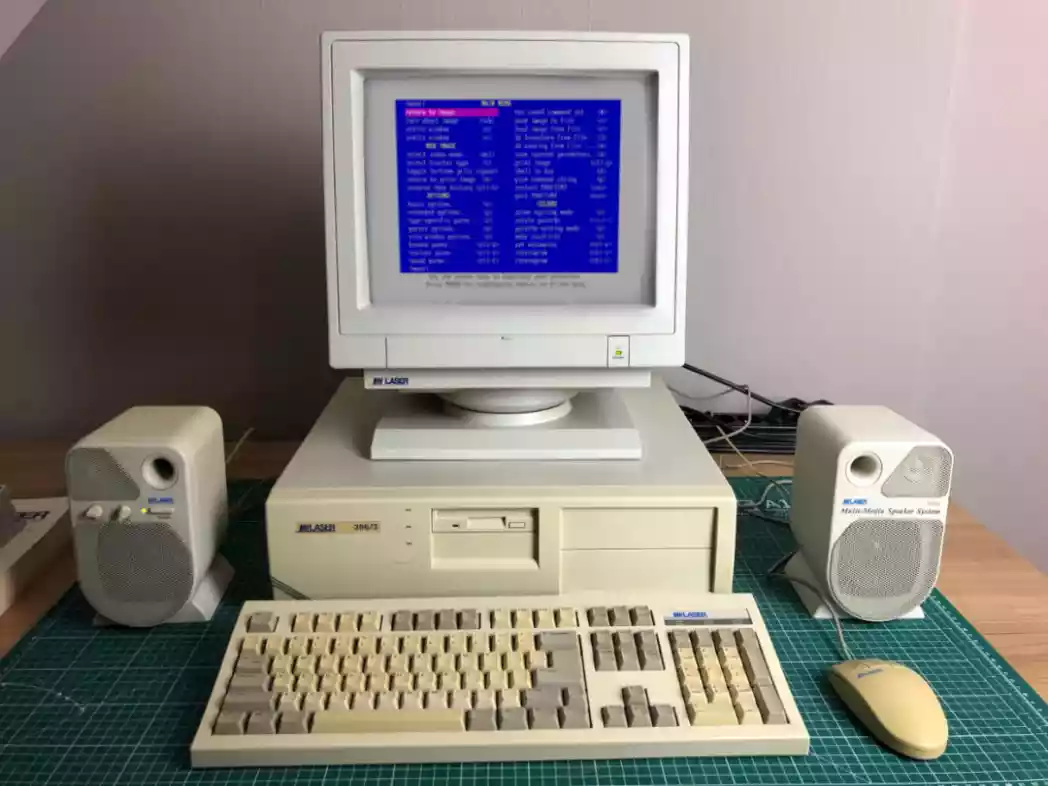
The computer I used was an IBM-compatible PC with an Intel 286 processor and a 14in CRT monitor. This was a mid-priced home computer of its day.
The PC used MS-DOS, and the fractal software was called Fractint, published by the Stone Soup Group.
The image itself was a GIF87a file, the colours are mapped to a 256 colour palette, so compressed well and because Fractals are generated from a mathematical equation, you could store the parameters in the image file itself. This was great as you could reload the image and start zooming in and exploring the fractal again.
What this fractal means to people today
Following this time, the hype and popularity of fractals began to dwindle. There was a lot more computer imagery in mainstream media, and fractal images, which first occupied this space, started to lose their novelty.
Was this fractal image art? I like to think it somehow occupies a space outside of these definitions, much in the same way AI-generated art is now. It's interesting to think that as this image is being absorbed into the data sets of visual language models, echoes of it will persist indefinitely.